The Journey to Causality: From Dashboards to Causal Inference

Introduction
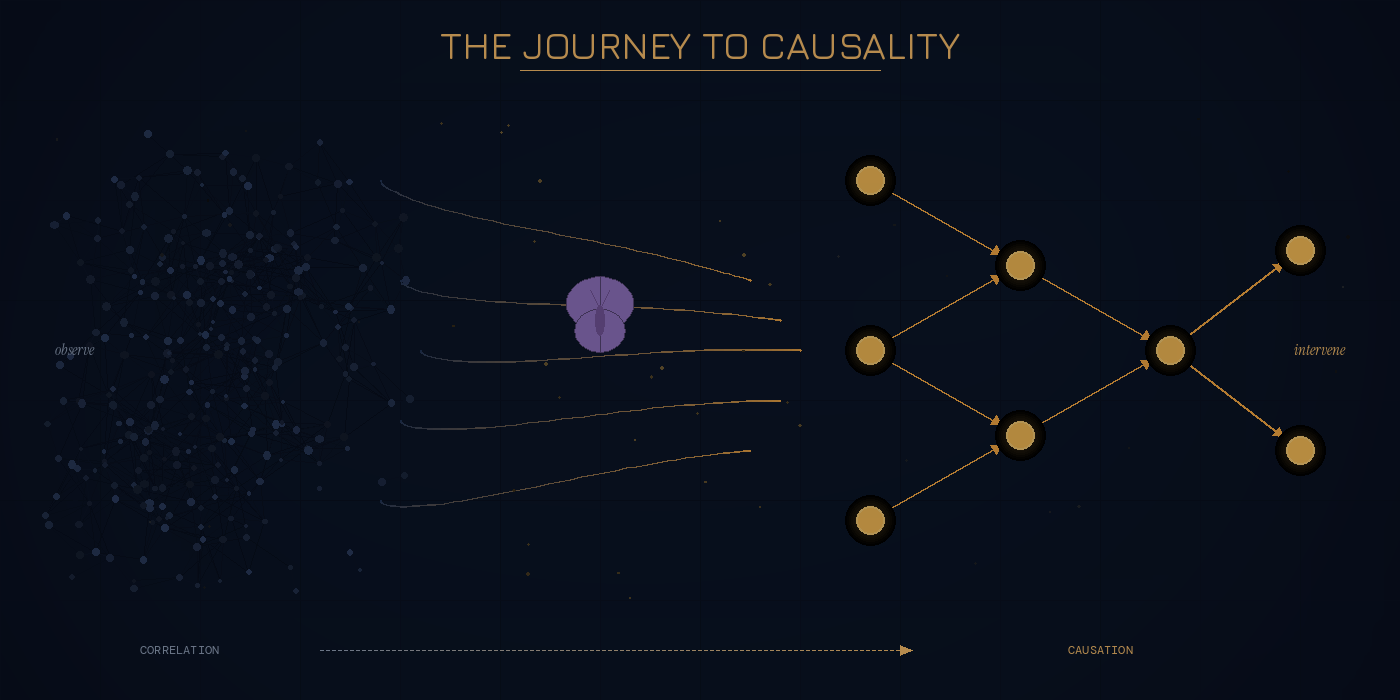
Every data professional’s journey follows a similar arc: we start by describing what happened, move to predicting what might happen, and ultimately seek to understand why things happen and what would happen if we intervened. This article traces that journey from basic observational analytics through correlation, regression, machine learning, causal inference, and finally to simulation-first causal frameworks — the cutting edge of data science.
The progression isn’t just about sophistication; it’s about answering fundamentally different questions:
- Observational: What happened?
- Correlation: What tends to happen together?
- Prediction: What will happen?
- Causation: What will happen if we do something?
- Simulation: What should we do, and what would have happened?
Let’s walk through each stage with concrete examples and code.
Stage 1: Observational Analytics (The Foundation)
Full story and code available on my substack: https://brianjamescurry.substack.com/
About the Author
Brian Curry is a Kansas City-based Data Scientist, AI expert, and founder of Vector1 Research, where he explores the frontier of Artificial Intelligence, Causal Inference, Agentic Systems, and Economic Modeling.
His work focuses on building intelligent systems that reveal the causal structures driving performance across marketing, content, and economics. He is the creator of PyCausalSim (causal discovery through simulation), Papilon (complex system optimization), Daedalus (causal and economic analysis), and Memory-Node Encapsulation (data structures for artificial episodic memory).
Contact: brian@vector1.ai


